Stiffness is one of the most common challenges riders notice in their horses. Sometimes it shows up after a demanding training session, sometimes on colder days, or it develops gradually without a clear reason. A horse may feel less willing to stretch, the back might not feel as supple as usual, or movement can seem tighter than expected, even when the training routine itself has not changed.
These signs are not always linked to injury or a specific problem. Often, they are part of how a horse responds to workload, recovery time, weather conditions, age or daily management. Just like people, horses can carry tension in their bodies, especially when muscles are asked to perform regularly or when rest and recovery are not perfectly balanced.
Supporting comfort and mobility is therefore an important part of long term equine care. Correct training, a proper warm up and thoughtful management always form the foundation. At the same time, many riders look for additional ways to help their horse feel more relaxed and comfortable between training sessions.
Recovery and stiffness in horses: more than just training
Recovery does not start and end with the ride itself. What happens before and after work, as well as on rest days, plays a key role in how a horse feels over time. Small, consistent choices in daily care can influence how easily a horse moves, how relaxed the topline feels and how ready the body is for the next session.
This is where supportive techniques are often introduced. Not as a replacement for training or professional care, but as a complement to daily routines. Techniques such as warmth, massage and light therapy are increasingly used to support relaxation and recovery when applied thoughtfully and consistently.
Heat, massage and light therapy for horses explained
Within equestrian sport, heat, massage and light therapy are increasingly used as supportive techniques for muscle relaxation and recovery after training. Each technique affects the body in a different way and can be applied at various moments within a horse’s routine.
Heat technology for horses
Heat is primarily used to support circulation. When heat is applied, blood vessels dilate, allowing oxygen and nutrients to be transported more easily to the muscles. This process supports natural recovery after exercise and may help reduce a stiff or tight feeling in the muscles. Heat is therefore often used after training, on rest days, or as part of a calm preparation before riding, especially in colder temperatures or for horses that are prone to stiffness.
Massage products for horses
Massage works mechanically on the muscle tissue. Through gentle, rhythmic movements, muscles are encouraged to release tension, which can contribute to relaxation and a more comfortable feeling throughout the body. Massage is often used to give specific areas extra attention, for example after intensive work or in horses that are regularly in training. It can also play a supportive role in daily management for older horses or horses that tend to hold tension in certain muscle groups.
Light therapy for horses
Light therapy uses red and infrared light wavelengths that act at different tissue depths. Red light primarily targets more superficial tissues, while infrared light penetrates deeper into muscles and soft tissues. Within equestrian care, light therapy is usually applied locally, for example around joints, muscles or sensitive areas. It is often used as part of a recovery focused approach after training or during periods of increased workload.
Applying heat, massage and light therapy in daily care
Although heat, massage and light therapy each have their own mode of action, they are in practice often used as part of a broader routine aimed at comfort, recovery and long term wellbeing. They are not a replacement for correct training, professional guidance or medical care, but can be a valuable addition when applied thoughtfully and consistently.
Supportive techniques are today available in different forms, ranging from massage tools and heat products to light therapy equipment. The right choice depends on where support is needed and how it fits into your horse’s daily routine. Some riders choose general support for the back and topline, while others give more targeted attention to specific muscle groups, joints or the area around the poll and neck. Timing, frequency and suitability are more important than intensity.
Tools that combine heat and massage, such as back focused massage pads, are often used as part of daily care or after training. More targeted tools can be used when specific areas require extra attention, while light therapy products are generally applied locally around joints or legs to support recovery.
When to use supportive techniques
Supportive tools can be used at different moments, depending on your horse’s workload and individual needs:
- After training or competitionOften used as part of a cool down routine to help the horse relax after physical effort and transition more comfortably from work to rest.
- On rest daysGentle support can help maintain comfort and mobility, especially for horses that tend to feel stiff when they are not exercised.
- Before ridingA short preparation moment, particularly in colder conditions or during busy training periods, can help the horse start work feeling more at ease.
- For older or more sensitive horsesRegular, low intensity support is often included in daily management to promote comfort without adding extra strain.
- Consistency over intensitySmall, regular sessions usually have more value than occasional intensive use, especially when observing how the horse responds over time.
Choosing the right support for your horse
Horses show tension, stiffness or fatigue in different ways. By observing where and when your horse needs support, you can choose solutions that fit naturally into daily care and training routines.
To make things easier, we’ve created a simple guide to help you recognise common signs of stiffness or tension and explore supportive options that may fit naturally into your horse’s routine. This overview is meant as a practical reference, not a set of fixed rules.
What you might notice - A supportive approach (and suitable product)
The back feels less supple after work: A short routine with warmth and gentle massage can help the topline relax, for example with a back focused massage pad such as the Equilibrium Massage Pad Heatsense
Certain muscles feel tight or overworked: Targeted warmth and massage allow focused attention on specific areas, for instance using a local massage tool like the Equilibrium Hot Spot Massage Mitt
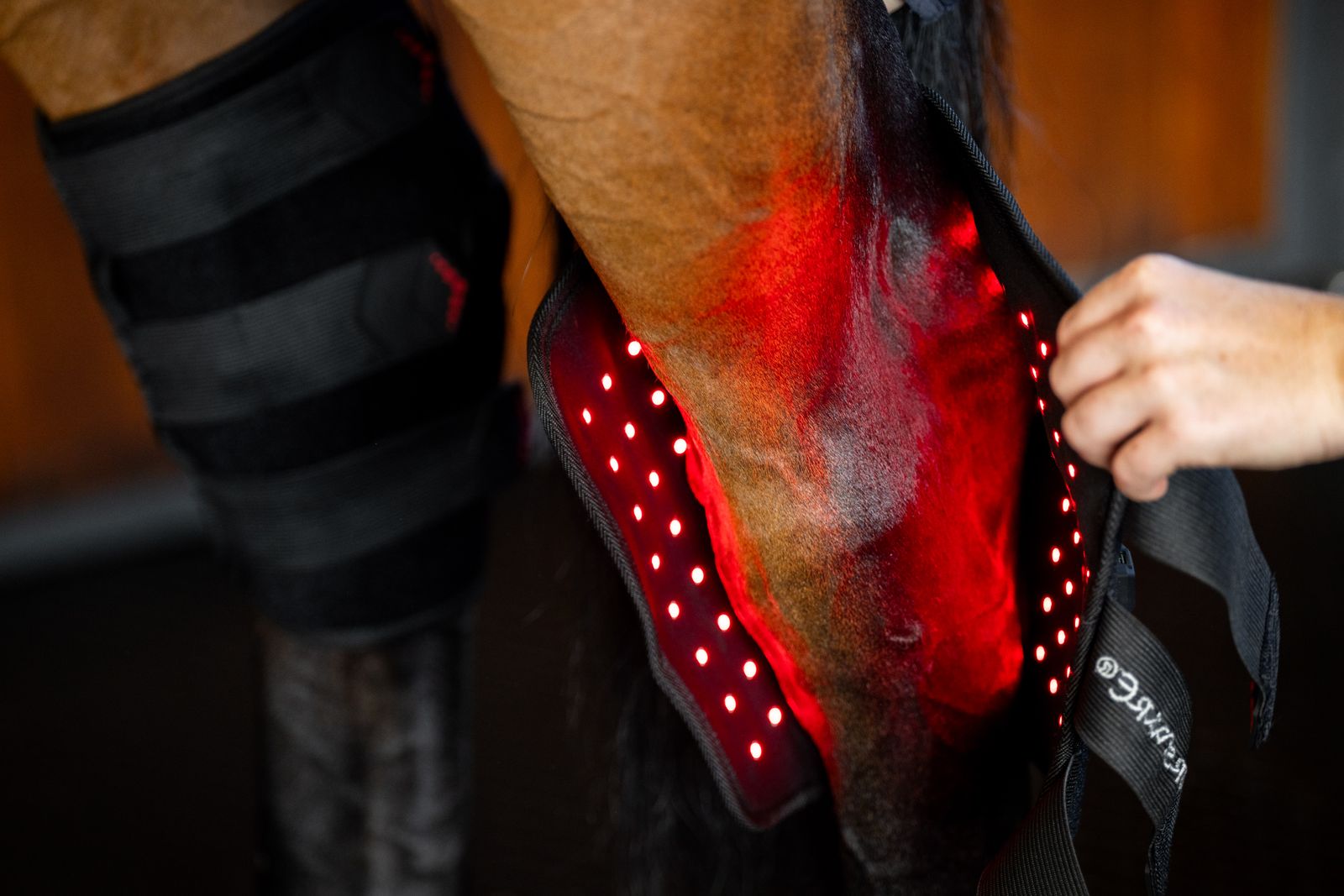
The hocks seem stiff or sensitive: Local light therapy is often used to support comfort and ease of movement, such as with the Horseware LED Red Light Therapy Hock Boot
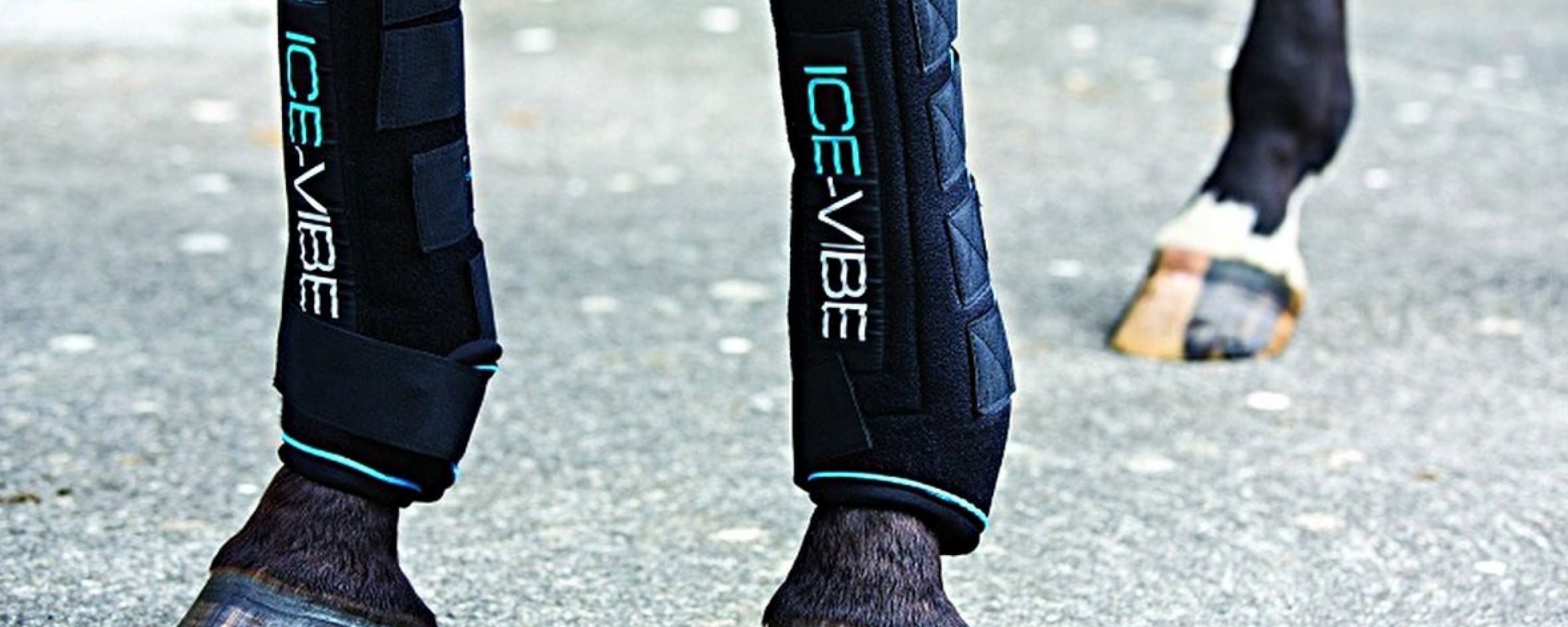
Supporting the legs after training: Red and infrared light are commonly used to support circulation and recovery in the lower limbs, for example with the Horseware LED Red Light Therapy Leg Wrap
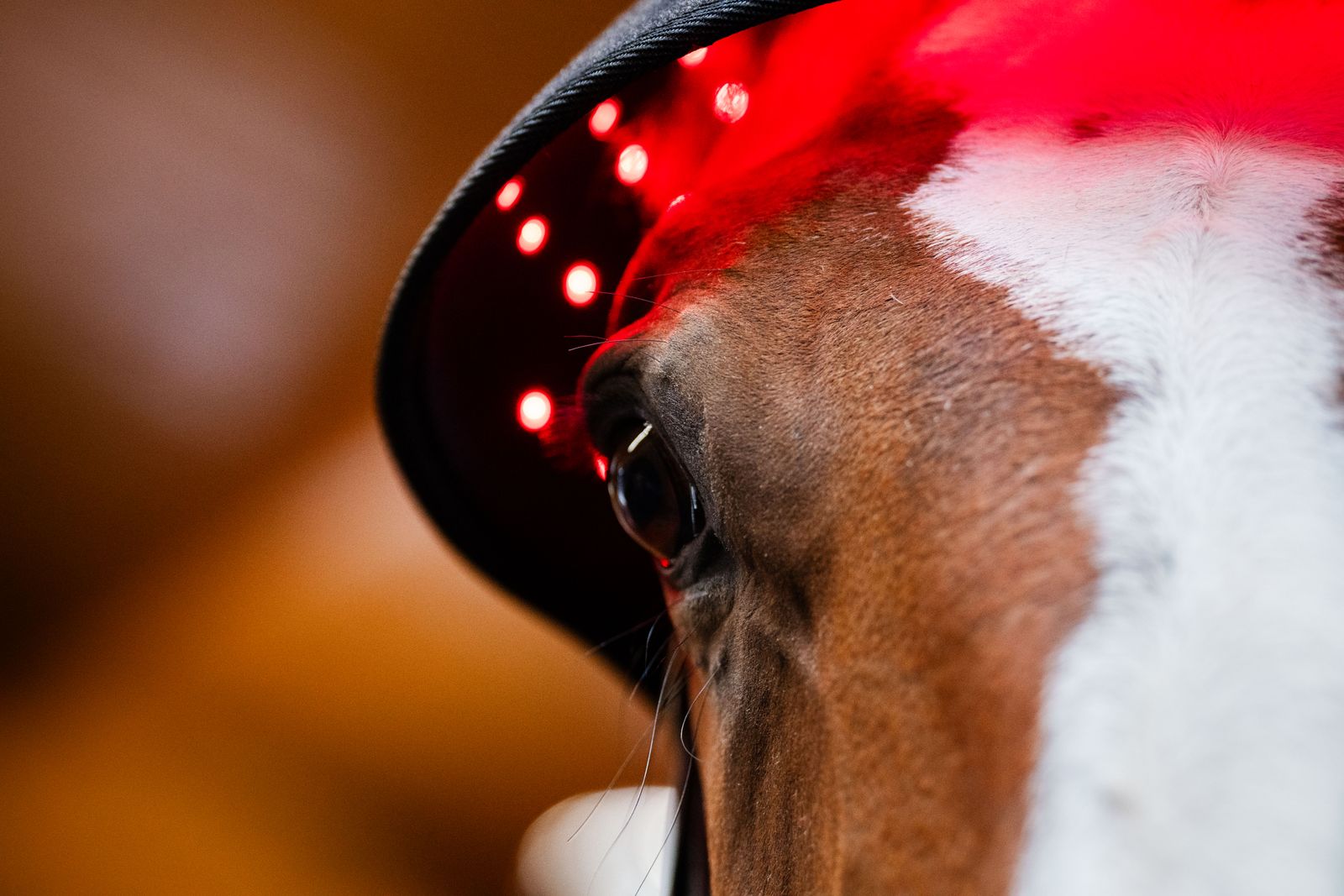
Tension around the poll or neck: Calm, low intensity light therapy can encourage relaxation in this sensitive area, such as the Horseware LED Red Light Therapy Poll Cap
Your horse feels stiff on rest days: Short, consistent sessions with gentle warmth or massage help maintain comfort as part of daily management
An older horse needs extra care: Regular, low intensity support focused on comfort rather than intensity fits well into a steady routine
Before riding, especially in colder conditions: A calm preparation moment using warmth can help the horse start more relaxed, for example a brief session with a massage or heat-based product
During periods of intensive training: Combining massage, warmth and light therapy into a steady recovery routine can support the body over time
Need a bit more guidance?
Every horse is different, and sometimes a personal approach makes all the difference. Our team is always happy to help you find the right support for your horse and answer any questions you may have. Feel free to reach out for tailored advice or additional information