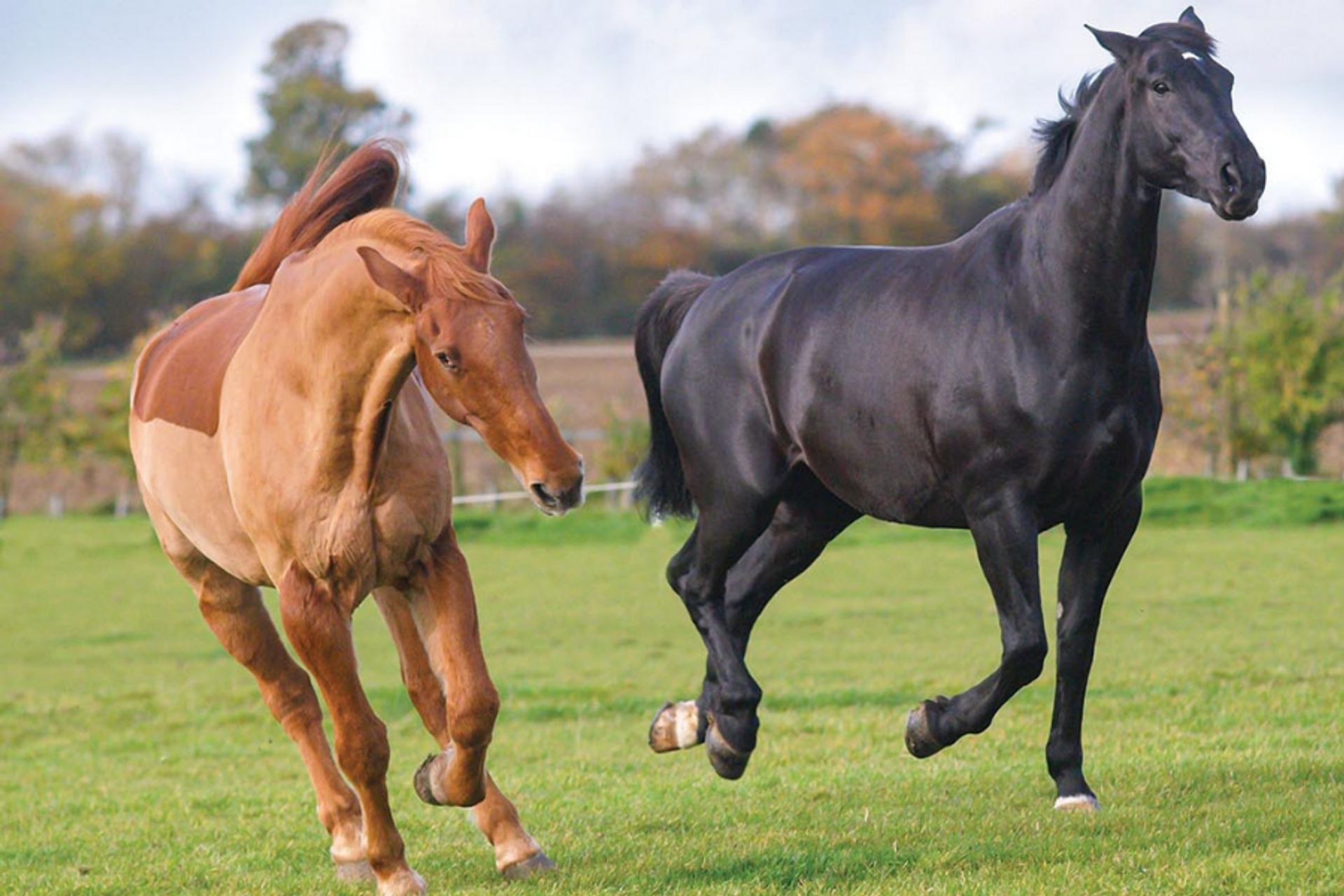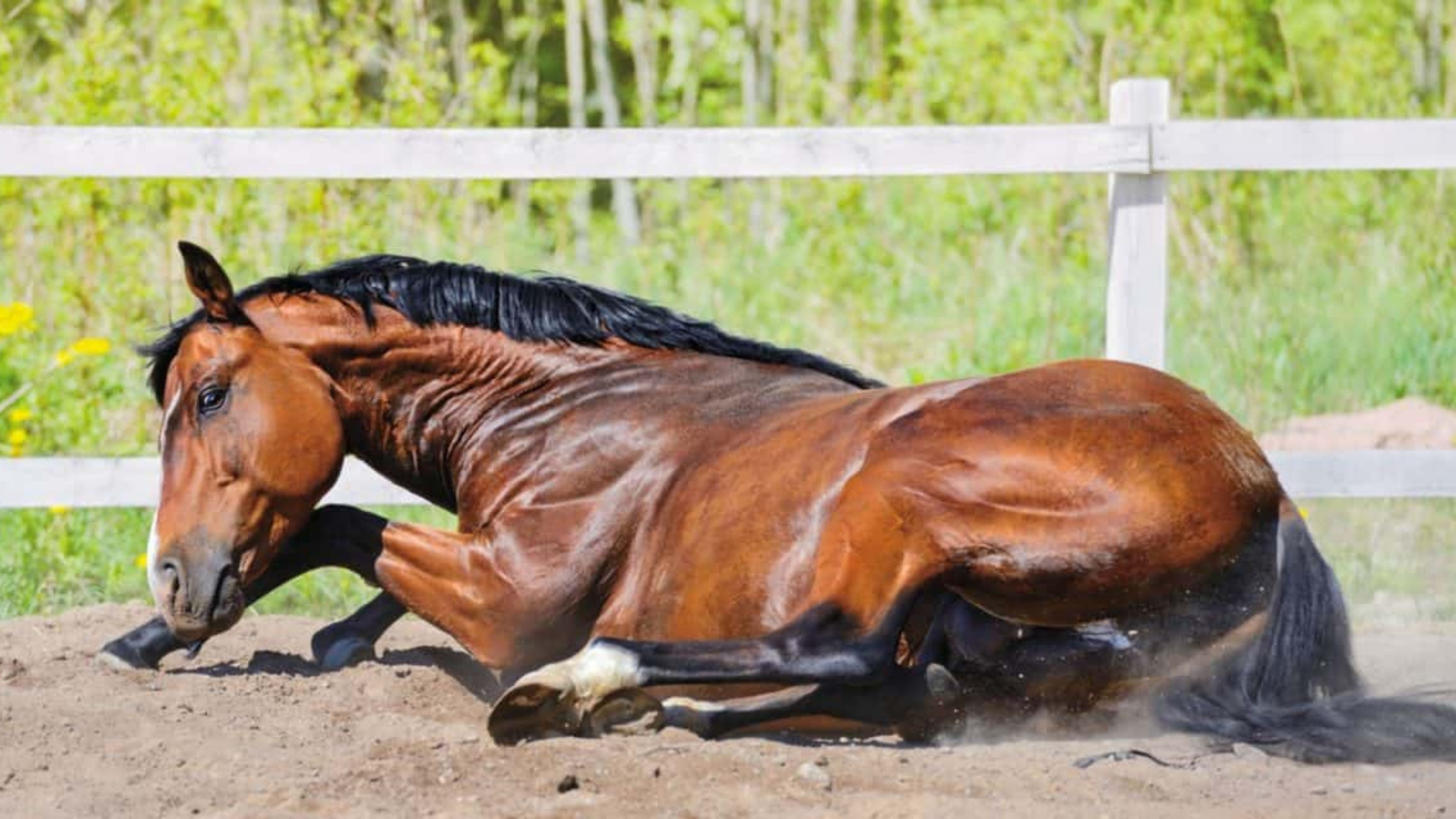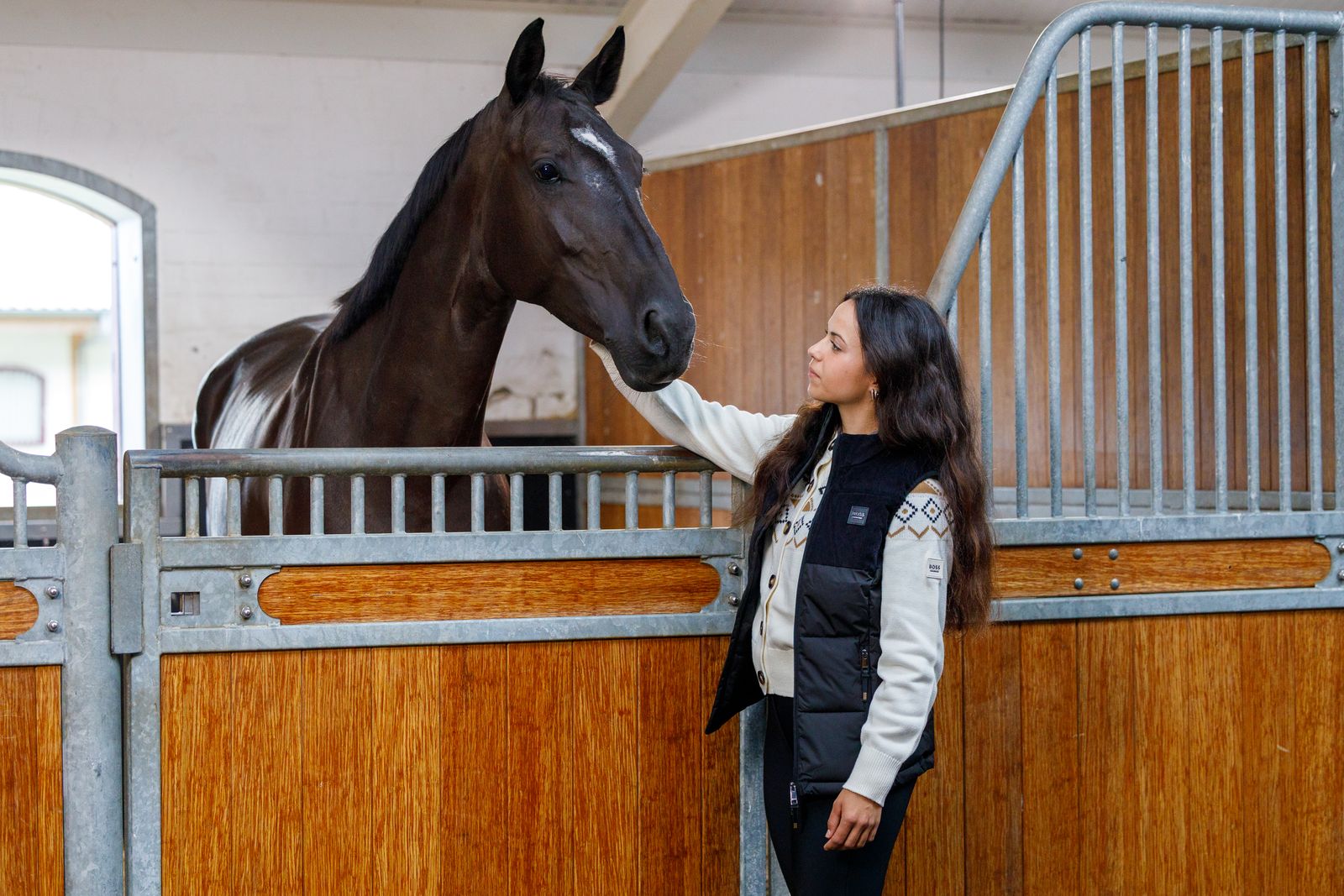
Stress in horses is not always easy to recognise.
In many cases, it shows itself in small changes in behaviour, tension or focus. What may seem like sensitivity or character can sometimes be a response to underlying tension. In certain situations, stress can also be linked to physical factors, such as digestive discomfort, where issues like gastric ulcers are known to play a role in some horses.
Understanding these signals is one part of the picture. In practice, many riders also look at different ways to support their horse in situations with increased stress.
In this blog, we take a closer look at how to recognise signs of stress and explore the different types of calming supplements that are commonly used in these situations.
Recognising signs of stress in horses
Stress can present itself in different ways, and often the early signs are easy to overlook.
You may notice:
- A more alert or reactive attitude than usual
- Tension in the body or movement
- Difficulty focusing during riding or handling
- Changes in behaviour around feeding or stable routines
- Increased sensitivity to surroundings
These signals do not always point to one single cause, but they can indicate that a horse is processing more stimuli than it comfortably can. Especially when multiple factors come together, these small changes can become more noticeable over time.
Support options for horses in stimulating environments
Alongside factors such as training, routine and environment, some riders also consider calming supplements as part of their approach. These products are developed to support horses in handling external stimuli, while allowing them to remain responsive.
At Emmers Equestrian, we offer a carefully selected range of these products, with different forms and ways of use.
Types of calming supplements and how they are used
Calming supplements for horses are available in different forms, each with their own characteristics and way of use. Rather than offering one single solution, these variations make it possible to align the product with a specific situation, routine or preference.
The difference between these forms is mainly found in timing, ease of use and how they fit into daily management.
Liquid - flexible and adaptable in use
Liquid calming supplements are known for their versatility and ease of use within daily routines. They can be mixed with feed, which makes them a practical option for horses that may be more selective with powders or changes in texture.
Because liquids blend easily into feed, they are often well accepted and do not require significant adjustments to existing feeding routines. This can be especially useful for horses that are sensitive to changes in taste or structure.
Another advantage of liquid products is the ability to adjust the amount depending on the situation. This makes them suitable for both daily use and more specific moments where a horse may be exposed to increased stimuli.
At the same time, some riders prefer liquids because they are easy to measure and integrate into existing management, without adding additional volume to the feed.
As with any product type, the choice often depends on what fits best within the horse’s routine and how well the product is accepted.
VetGen Tranquility is a liquid formula that is often mentioned when flexibility and ease of use are important. It can be mixed with feed and adjusted depending on the situation, which makes it suitable for a variety of moments. Because of this versatility, it is regularly considered both within daily routines and in situations where horses are exposed to increased stimuli, such as transport or competitions.
DH Tranquillity is compact liquid solution is designed with convenience in mind. Its size makes it easy to take along, which can be practical for use on location or when travelling with your horse.
NAF Magic Liquid is a well-known liquid supplement that is often used within daily routines. It is commonly associated with consistent use in environments where horses are regularly exposed to external stimuli.
Powder or feed-based supplements - part of a longer-term routine
Powder or feed-based calming supplements are typically used over a longer period and are added to the daily ration.
They are often associated with consistency, as they become part of the regular feeding routine rather than being linked to a specific moment. This makes them a common choice in environments where horses are exposed to recurring or ongoing stimuli over time.
Because they are integrated into the daily routine, they are often selected for their practicality and ease of incorporation into existing feeding habits.
Cavalor Calm is typically used as part of a daily feeding routine. It is often associated with longer-term use, particularly in situations where horses are regularly exposed to changing or stimulating environments.
Paste - for targeted, short-term moments
Paste is typically used shortly before a specific situation in which a horse may be exposed to increased stimuli, such as transport or competition.
The syringe format allows for quick and precise administration, which makes it especially practical in moments where timing plays an important role. Because it is given close to the moment itself, paste is often associated with short-term use rather than daily routines.
For riders who are looking for a product that can be applied easily and directly before a specific event, this form is often considered due to its convenience and simplicity in use.
Equine America So Calm Paste is a paste designed with ease of use in mind. The syringe allows it to be administered directly and without preparation, making it suitable for situations where time and practicality are key, such as competitions or travel.
Every horse is different
The way a horse experiences and responds to stress can vary greatly. Factors such as temperament, environment, training and previous experiences all play a role.
This also applies to the use of calming supplements. What fits one horse or situation may not have the same effect in another.
For this reason, many riders take a gradual approach in exploring what works best within their own management and routine.
Conclusion
Stress in horses is not always immediately visible, but often shows itself through small changes in behaviour, tension or focus.
By recognising these signals, it becomes easier to understand how a horse experiences its environment and when additional support options may be explored.
At Emmers Equestrian, we aim to offer a carefully selected range of products in different forms, so riders can choose what fits their horse and situation best.
FAQ about stressed horses
How can I recognise stress in my horse?
Look for subtle changes such as increased tension, sensitivity or reduced focus.
What situations can cause stress in horses?
Transport, competitions, changes in environment and daily routine are common factors.
What is the difference between paste and liquid calming supplements?
Paste is often used for specific moments, while liquids are more flexible for daily or adjustable use.
Are calming supplements always necessary?
Not every situation requires additional support. It depends on the horse and the context.
Which product is most suitable for my horse?
This varies per horse and situation, as well as the preferred form of use (paste, liquid or supplement).